

Biodiversity Conservation
There is a certain arrogance in the way we speak of nature, as though it exists somewhere outside us. As though forests begin only after the last building, rivers become meaningful only when crossed, and wildlife becomes important only when it appears in the frame at the correct distance, in good light, preferably before breakfast.
Biodiversity reminds us otherwise.
It is not only the tiger in the forest, the rhino in the grassland, the snow leopard on a high ridge, or the hornbill moving like a winged myth through the canopy. It is also the grass that holds the soil, the insects that pollinate the field, the fungi beneath the leaf litter, the medicinal plant known to a village elder, the wetland that receives migratory birds, the orchard that feeds both people and bees, the riverbank where life gathers quietly before it is noticed.
Biodiversity is the living intelligence of a place.

At RARE, Biodiversity Conservation is a Touchstone because travel depends more deeply on nature than it often admits. The landscapes that move us, the seasons that shape our journeys, the food that arrives at the table, the birdsong that makes a morning memorable, the forest that gives us silence, the river that offers passage, the mountain that asks us to breathe more slowly, all are held within living systems that are delicate, ancient and increasingly under pressure.
A destination is not sustained by scenery alone. It is sustained by relationships. Between soil and water. Between forest and village. Between predator and prey. Between crop and pollinator. Between community knowledge and ecological care. Between hospitality and restraint.
The trouble with modern travel is that it can be very good at admiring nature and very poor at understanding it. We arrive in forests wanting sightings, in mountains wanting views, at rivers wanting photographs, and in deserts wanting sunsets. None of these desires are wrong. Wonder is often where responsibility begins. But wonder without knowledge can become consumption. The work of conscious travel is to move the traveller from looking at nature to learning how to belong, however briefly and humbly, within its world. This is where biodiversity conservation becomes central to hospitality.
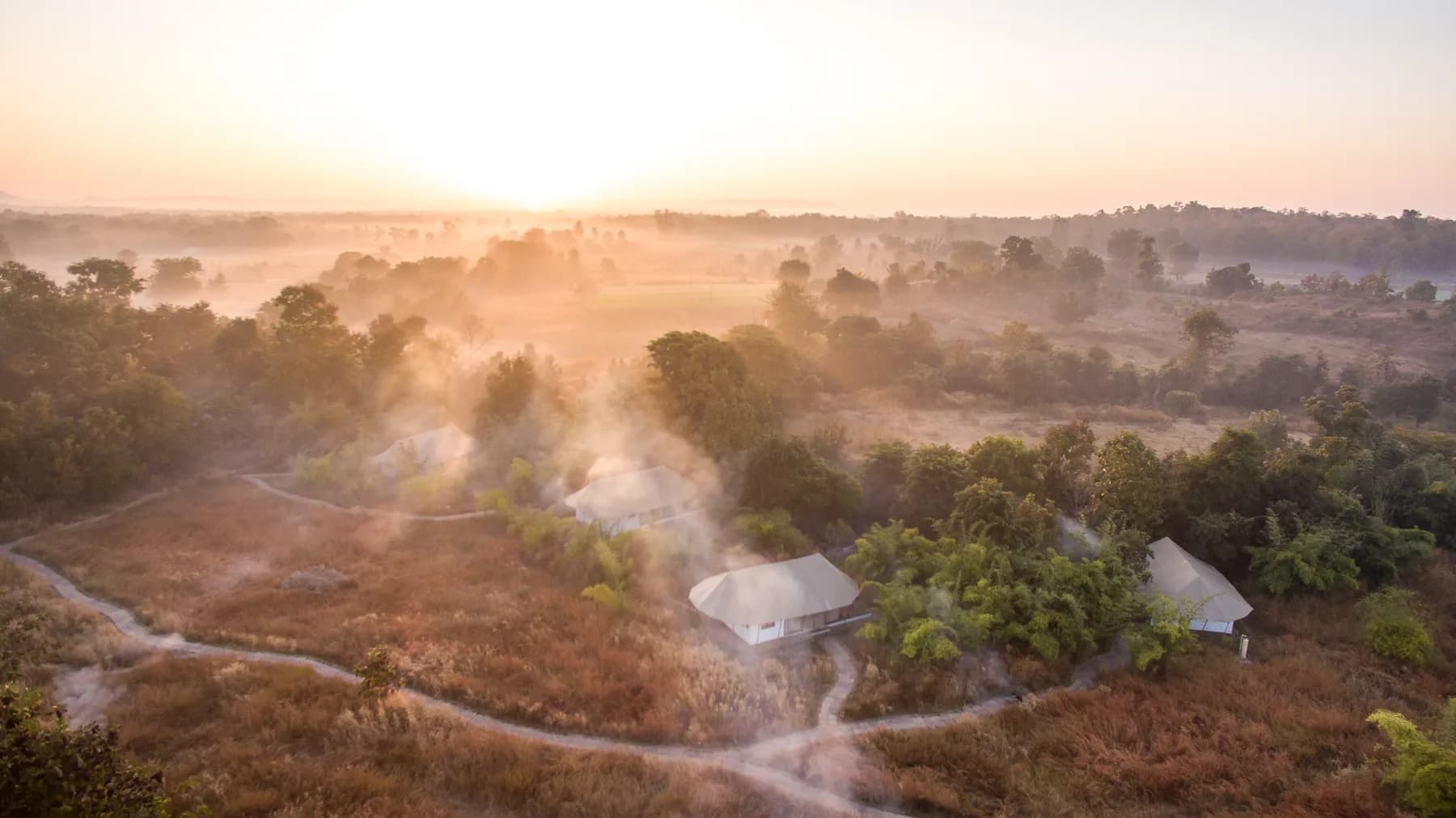
A RARE hotel in a wild or rural landscape is never just a place to sleep near nature. It is, or should aspire to be, a participant in the ecology around it. Its choices matter. What it plants, what it removes, how it uses water, how it manages waste, how it lights the night, how it sources food, how it trains guides, how it speaks of wildlife, how it works with neighbouring communities, how it builds, how it restores and how it restrains itself: each of these decisions leaves an imprint on the living landscape.
Conservation is not always dramatic. It is not always a rescue, a headline, or a magnificent animal returning to applause. More often, it is ordinary, repetitive and patient. Protecting a water body. Letting native vegetation return. Reducing chemical use. Supporting local naturalists. Creating safe corridors. Keeping plastic away from wetlands. Choosing not to overbuild. Teaching guests why silence matters in a forest. Explaining why feeding wildlife is not kindness. Allowing a meadow to remain untidy enough for life.
There is great intelligence in leaving some things alone.
Many RARE hotels are located close to forests, grasslands, wetlands, deserts, farms, plantations, rivers, coasts and high-altitude habitats. These are not empty leisure zones waiting to be packaged for the traveller. They are lived landscapes. People graze animals, collect forest produce, farm small fields, gather herbs, fish, weave, walk to school, worship, cook, repair, celebrate, mourn and survive within them. Biodiversity conservation, therefore, cannot be separated from community.
The future of wildlife and the future of local people are not parallel stories. They are intertwined. A forest cannot be protected meaningfully if the communities around it are excluded from its value. A wetland cannot thrive if the people beside it see no reason to care for it. A craft tradition may be linked to plant fibres, dyes, grasses or pastoral routes. A food tradition may depend on seasonal diversity. A village economy may be strengthened when conservation creates dignified work as guides, naturalists, farmers, gardeners, cooks, trackers, boatmen, artisans and storytellers.
This is why biodiversity conservation must be community-inclusive. It must create pride, livelihood and participation. Otherwise, it risks becoming a polished idea imposed from elsewhere, admired by guests and resented by those who live closest to its consequences.
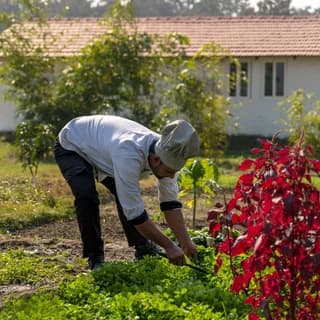
The best nature experiences are often led by people who have not merely studied the landscape, but belonged to it. The tracker who reads the ground. The boatman who understands the moods of a river. The farmer who knows which bird arrives before the rain. The gardener who recognises the wild plant that should not be cleared. The naturalist who can make a child care about a termite mound as much as a tiger. These are not decorative roles in a guest itinerary. They are forms of ecological literacy.
A traveller who meets such knowledge travels differently. They begin to understand that a forest is not a stage. It is a society. That a leopard is not an isolated thrill, but part of a wider arrangement of rocks, goats, herders, prey, scrub and tolerance. That a tiger sighting is not the whole forest, but only one sentence in a much longer text. That a tea garden is also a bird habitat, a water story, a labour story and a question of soil. That a river is not a view from a balcony, but a moving commons.
Biodiversity expands the imagination. It teaches scale. It is very difficult, after all, to remain the centre of the world while watching a spider repair its web with more discipline than most governments.
There is also an aesthetic argument for biodiversity, though we do not make it often enough. Monoculture is dull. Ecological richness is beautiful because it is unpredictable, layered and alive. A diverse landscape sounds different, smells different, feeds differently, heals differently and remembers differently. It holds more stories. It allows for surprise. The traveller may arrive hoping for one animal and leave remembering a dawn chorus, a flowering tree, a herd of deer moving through mist, a fish eagle over a river, or the astonishing architecture of a nest.
In this sense, biodiversity conservation is not a niche environmental concern. It is the foundation of experience itself. When biodiversity declines, travel becomes poorer. Forests grow quieter. Rivers lose their pulse. Fields become dependent and brittle. Local food becomes less local. Seasons become less legible. Communities lose knowledge. Children inherit destinations that look intact from a distance but have begun to empty from within.
For RARE, Biodiversity Conservation is a commitment to look beyond the obvious and ask more demanding questions. Does a hotel protect native species or replace them with ornamental convenience? Does it support habitat, or only market proximity to it? Does it employ and train local naturalists? Does it help guests understand the ethics of wildlife viewing? Does it reduce pressures on water, soil and waste systems? Does it work with communities as partners in conservation? Does it understand that light, sound, speed and volume all affect the wild? Does it measure success only in occupancy, or also in what remains healthy around it? These questions are not meant to make travel joyless. Quite the opposite. They return joy to its proper scale.
There is immense pleasure in knowing that a stay supports a landscape rather than merely occupying it. That the garden feeds butterflies and not only the hotel’s aesthetic. That the kitchen values seasonal local produce. That the guide can explain the absence of an animal as eloquently as its presence. That the night remains dark enough for stars, insects and owls. That the lake is not just ornamental, but alive.
Biodiversity Conservation, as a RARE Touchstone, reminds us that every journey takes place within a web of life, whether we notice it or not. The purpose of travel is not to stand outside that web and admire it. It is to recognise, however briefly, that we are already inside it.
To travel through a biodiverse landscape is to be corrected by the world. To be made smaller, more attentive, more grateful. To understand that the rarest luxury is not isolation from nature, but relationship with it.
And perhaps that is the real work of hospitality in our time: not only to host the traveller, but to help the traveller become a better guest of the earth.